











A root canal treatment (also called endodontic therapy) is a dental procedure used to treat infection or damage within the pulp (the soft inner tissue) of a tooth. Here’s a quick breakdown of what it involves and why it’s done:
🦷 When Do You Need a Root Canal?
You might need one if you have:
Severe toothache (especially when chewing or applying pressure)
Prolonged sensitivity to hot or cold
Discoloration of the tooth
Swelling or tenderness in nearby gums
Pus or abscess (sign of infection)
🔍 What Happens During the Procedure?
Diagnosis & X-rays: The dentist takes X-rays to see the shape of the root canals and determine if there’s infection.
Anesthesia: Local anesthesia is used to numb the area.
Pulp Removal: The dentist drills into the tooth and removes the infected or dead pulp.
Cleaning & Shaping: The root canals are cleaned, shaped, and disinfected.
Filling: The canals are filled with a biocompatible material (usually gutta-percha).
Sealing & Restoration: A temporary or permanent filling is placed. Often, a crown is added later to protect the tooth.
⏱️ How Long Does It Take?
Usually 1 to 2 appointments, depending on the severity.
🤕 Is It Painful?
Not anymore! With modern techniques and anesthesia, a root canal is usually no more uncomfortable than getting a filling. Most people feel relief afterward since the infection is removed.
🛡️ What to Expect Afterward:
Mild soreness for a few days (can be managed with painkillers).
Avoid chewing on the treated tooth until fully restored.
You’ll likely need a crown for durability.
If you want, I can also help with tips on recovery, costs, alternatives, or what to ask your dentist. Are you considering the procedure or just curious?

What Are Dental Implants?
Dental implants are artificial tooth roots made of titanium or zirconia that are surgically placed into the jawbone. They support replacement teeth (crowns), bridges, or dentures.
Key Benefits:
Natural look & feel
Permanent and durable (can last decades)
Prevents bone loss in the jaw
Restores chewing ability
Preserves facial structure
Main Parts of a Dental Implant:
Implant post (screw placed in jawbone)
Abutment (connects implant to crown)
Crown (the visible tooth)
Procedure Overview:
Consultation & imaging (X-rays, CT scans)
Implant placement surgery
Healing phase (3–6 months for osseointegration)
Abutment placement
Crown attachment
Who’s a Good Candidate?
Healthy gums and bone
Non-smoker (or willing to stop)
Good oral hygiene
No uncontrolled diabetes or autoimmune issues
Alternatives to Implants:
Dental bridges
Full/partial dentures
Resin-bonded bridges (for some cases)
Are you considering getting dental implants or just learning about them? I can help with cost info, recovery tips, or anything else you’re curious about.
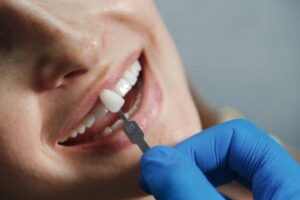
🦷 What Are Dental Crowns?
Dental crowns are tooth-shaped caps that are placed over a tooth to restore its shape, size, strength, and appearance. They fully encase the visible portion of the tooth above the gum line.
📌 Reasons for Getting a Crown:
To protect a weak tooth from breaking
To restore a broken or severely worn-down tooth
To cover and support a tooth with a large filling
To hold a dental bridge in place
To cover misshaped or severely discolored teeth
To cover a dental implant
After a root canal treatment
🧱 Types of Crowns:
Porcelain or Ceramic: Best for front teeth, matches natural color.
Metal (Gold, Platinum, or Base-Metal Alloys): Very durable, ideal for back teeth.
Porcelain-Fused-to-Metal (PFM): Stronger than all-ceramic, more natural-looking than all-metal.
Zirconia: Very strong and aesthetically pleasing.
Resin: Less expensive, but not as durable.
⚙️ The Process:
Preparation: Tooth is filed down to make space for the crown.
Impression: A mold of your tooth is taken (or scanned digitally).
Temporary Crown: Placed while the permanent one is made.
Placement: Permanent crown is cemented in place.
⏱️ How Long Do They Last?
Crowns typically last 5–15 years, depending on the material and how well you care for them.

🦷 What Are Dental Fillings?
Dental fillings are materials used to repair cavities (holes caused by tooth decay), cracked or broken teeth, or teeth that have been worn down (from habits like nail-biting or tooth grinding).
⚠️ Why You Might Need One
You have a cavity (from tooth decay)
A tooth is chipped or cracked
There’s minor damage that doesn’t need a crown
🧱 Types of Fillings
There are several types, each with its pros and cons:
Composite Resin (Tooth-Colored)
Pros: Looks natural, bonds well to tooth, good for front teeth
Cons: May wear down faster than others, can stain over time
Amalgam (Silver Fillings)
Pros: Strong and long-lasting, good for back teeth
Cons: Not tooth-colored, contains mercury (in very small amounts)
Ceramic (Porcelain)
Pros: Very durable, looks like natural teeth
Cons: More expensive, may require more tooth removal
Gold Fillings
Pros: Extremely durable (lasts decades), well-tolerated
Cons: Very noticeable, more expensive
Glass Ionomer
Pros: Releases fluoride (which can protect teeth), good for kids
Cons: Not very strong or wear-resistant
🛠 The Procedure (Quick Breakdown)
Dentist numbs the area
Removes decay or damage
Cleans the cavity
Fills and shapes the area
Hardens the filling with light (for composite) or lets it set (amalgam/gold)
🧼 Aftercare Tips
Avoid super hard/sticky foods right after
Maintain good brushing and flossing habits
Visit your dentist regularly

Getting dentures involves several steps, depending on your oral health and the type of dentures you’re getting. Here’s an overview of the typical dentures process:
🦷 1. Initial Consultation
What happens: You visit a dentist or prosthodontist (a specialist in dentures).
Purpose: They evaluate your oral health, take X-rays, and discuss your options (full dentures, partial dentures, immediate dentures, implant-supported dentures, etc.).
🧾 2. Treatment Planning
If you need tooth extractions, the dentist may schedule them in phases.
They’ll take impressions (molds) of your mouth to begin creating your custom dentures.
✂️ 3. Tooth Extractions (if needed)
Teeth are removed if you’re getting full dentures or if some teeth are unhealthy.
Healing time varies: 6–8 weeks typically before final denture fittings (unless getting immediate dentures).
🧪 4. Mouth Impressions & Measurements
Accurate molds are taken of your gums and any remaining teeth.
Measurements are also made to ensure correct bite and alignment.
🧑🎨 5. Wax Try-In
A wax model of your future dentures is made.
You try them on to check fit, comfort, and appearance before the final set is made.
Adjustments are made as needed.
🦷 6. Final Denture Fitting
Your permanent dentures are ready.
The dentist fits them, makes minor adjustments, and gives you instructions on care and use.
🔄 7. Adjustments & Follow-Up
You’ll likely need a few follow-up visits to adjust for sore spots or tight areas.
Dentures may feel awkward at first, but this improves with time.
🧼 8. Care & Maintenance
Clean daily with a soft denture brush.
Soak overnight in a denture cleanser.
See your dentist regularly for checkups.

🦷 What Is Kids Dentistry?
Kids dentistry is a branch of dentistry focused on the oral health of infants, children, and teenagers. Pediatric dentists are specially trained to care for a child’s teeth, gums, and mouth throughout the various stages of childhood.
👶 What Do Pediatric Dentists Do?
They provide:
Early dental exams (as early as 1 year old!)
Cavity prevention and treatment
Teeth cleaning and fluoride treatments
Orthodontic assessments (checking for early misalignment)
Habit counseling (like thumb sucking or pacifier use)
Care for dental injuries (like knocked-out or fractured teeth)
🪥 Why It Matters
Baby teeth set the stage for permanent teeth.
Early dental visits help prevent anxiety about dentists later in life.
Preventive care saves money and discomfort down the road.
🧒 When Should Kids Start Seeing a Dentist?
By their first birthday or within 6 months of the first tooth coming in.
Then, every 6 months for routine checkups and cleanings.

Getting your wisdom teeth removed can sound a bit intimidating, but it’s a super common procedure. Here’s a quick rundown of what to expect and how to prep and recover like a pro:
🦷 What Are Wisdom Teeth?
Wisdom teeth are your third molars, usually coming in during your late teens or early 20s. Some people have room for them—many don’t. If they’re impacted (stuck under the gums), coming in sideways, or causing crowding or pain, your dentist or oral surgeon might recommend removal.
🛠️ The Procedure
Local or General Anesthesia: Depending on how complex the extraction is, you may be awake (numbed only) or asleep.
Duration: Typically 45 minutes or less.
Simple vs. Surgical Extraction: If the teeth are erupted, it might be a simple pull. Impacted ones require small incisions.
💡 Prep Tips
Don’t eat or drink for at least 6–8 hours before surgery if you’re getting anesthesia.
Arrange a ride home afterward—no driving.
Wear comfortable clothes, and avoid makeup, contact lenses, or jewelry.
⏳ Recovery Timeline
First 24–48 hours: Expect swelling, bleeding, and grogginess.
3–5 days: Pain and swelling should start to ease up.
1–2 weeks: Most people are back to normal.
Complete healing: Takes a few months for bone and tissue to fully settle.
✅ Do’s and Don’ts
Do:
Use ice packs for swelling.
Take pain meds as prescribed.
Eat soft foods like yogurt, soup, or mashed potatoes.
Rinse gently with salt water after 24 hours.
Don’t:
Use straws (can cause dry socket).
Smoke or vape (slows healing).
Eat crunchy or spicy foods too soon.
Overdo physical activity for a few days.
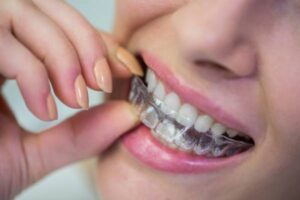
Hey! Are you looking for info on braces and aligners—like the differences, pros and cons, or which might be better for you (or someone else)? Here’s a quick overview to get us started:
🦷 Braces vs. Aligners: The Basics
Feature Braces Clear Aligners (e.g., Invisalign)
Appearance Metal or ceramic brackets Clear, nearly invisible trays
Removability Fixed on teeth Removable (but should be worn ~22 hrs/day)
Comfort Can cause irritation Generally more comfortable
Treatment Time Varies, usually 18–24 months Similar, sometimes shorter
Best For Complex cases Mild to moderate cases
Maintenance Brushing/flossing is trickier Easier oral hygiene
👄 Braces: Pros & Cons
Pros:
Great for complex or severe alignment issues
No temptation to remove them
Cons:
More noticeable
Can be uncomfortable and harder to clean around
😁 Aligners: Pros & Cons
Pros:
Nearly invisible
Can be removed for eating, brushing, photos
Cons:
Requires discipline to wear consistently
Not ideal for very complex cases